Thursday, 8 September 2022

Novel Review and Spiriit-filled Fiction Award: Nicholas of Haiti by Joseph Courtemanche.

 I reviewed this novel on 04/02/19 in another blog now defunct. 

Nicholas of Haiti

It was just another business trip until Nick Bacon's plane exploded and he fell from the sky over Utah. Hounded by the press for his sole survivor story, and suspected of planting the bomb by the F.B.I., he flees to Haiti with his boss' mission team to heal his injuries and give the world time to forget him. Haunted by visions of an abused little girl, Nick questions his sanity when he starts seeing demons almost everywhere he goes. He's forced to examine his own soul, and confront the dark forces surrounding him - and endangering the little girl. He winds up in a battle for the freedom of millions with a crew of allies that boggles his mind.

Perspective by Peter:

What a great novel! I thoroughly enjoyed this much more than I thought I would! I am glad I requested to review this for the author. This novel just consolidates that any novel by Courtemanche is worth reading. 

This is a very different novel that his debut novel, Assault on St Agnus. This is not a bad thing. It shows the author's versatility in writing in different genres and styles. I like both.

Courtemanche has crafted a novel that is engaging, a joy to read and one that made me feel very comfortable being in. He has brought to life the lifestyle and culture of Haiti and this is not just due to his research and ability as a wordsmith but also due to being there in his mission work. I felt like I was there. I had a very different impression of what Haiti was like from growing up and from school as a very poor country with a strong demonic influence based on voodoo and other such practices. I did not know there was such a strong Roman Catholic influence and that this was from the French settlers since the 16th century.  

Courtemanche has three main plotlines in this novel. It starts off with the plane that Nick in on being the subject of a terrorist attack, or that is what we are led to believe as it is never proved, but Nick is being framed for this as he is the sole survivor, having fallen 30,000 feet without a parachute and only sustains minor burns to his face and a fractured ankle. Interspersed throughout the novel is the progression of the FBI seeking him out to convict him of this terrorist attack. This plotline also involves Nick's sister, Jean, who is a lawyer and using her professional expertise to outsmart the FBI agents in framing Nick.

Then we have the subplot of the sex trafficking of Haitian children. This introduces Nick to Violene, one of the slaves, through visions of her even before he arrives in Haiti. This is tied in with the supernatural transformation of Nick into a version of St Nicholas of Santa Claus fame. In this novel, he is known as Papa Noel as the Haitians call him. Courtemanche has based the events of Papa Noel from those of the original Nicholas of Myra which is what Santa Claus is based on in this modern era. For those who want to know more, it is the author who is depicted as Nicholas of Haiti on the cover of this novel and who plays Santa Claus as one of his many pursuits in his life.

This plotline forms the basis of the third plotline of this novel and that is of the supernatural. From the explosion on the plane, Nick's miraculous survival and escape from the clutches of the FBI, his visions of Violene, his supernatural confrontation with the demonic strongholds of Haiti, his conversion to Christianity, followed by more supernatural signs and wonders all point to him being appointed by God to break the stronghold of demonic power and rule over Haiti and the eradication of slavery and human trafficking not only in Hait but around the world.

Courtemanche has done a superb job of showing Nick's spiritual and physical transformation into a Spirit-filled warrior and who no longer resembles physically the Nichols Bacon of the pre-terrorist attack. Here the author portrays spiritual warfare Biblically based with all power and authority that the Bible says is given to those who are in right relationship with Him and who use the Biblical principles outlined therein. And he has also depicted the demons as being subservient to this power and by the use of Jesus' name just as the Bible states. But one spiritual principle that Courtemanche has shown well is how Nicholas acted not in his own strength or power in his confrontation with the demonic strongholds but only by the Spirit working through him in total submission to the Spirit. He has Nicholas stating and acting as a servant of God and not anything being about him or for his vainglory.

I found it a breath of fresh air to have some biblical explanation into salvation and other issues explain as they are in helping Nick learn about God and stimulate his need for the Saviour. This is depicted well by Courtemanche has depicted including how he opened himself to the Spirit of God when he realised that God had pre-ordained him to take on the demonic strongholds of Haiti and God was performing many signs and wonders through Him. The contents of this paragraph and the previous one remind me of the verse from Zechariah 4:6 that says,

So he answered me, “This is the word of the Lord to Zerubbabel: ‘Not by strength or by might, but by My Spirit,’ says the Lord of Hosts.

I am not sure if this "principle" is intentional on the Author's part but in depicting it as he has, it definitely comes across as an important message to the Christian as a faith principle and way of life and in this novel, it is a witness to the unbeliever. In this depiction, it can be said that an unbeliever will see the working of God and not of the person who exhibits these signs and wonders. 

Courtemanche has depicted the characters to be ones who are very relational. I have a soft spot for Larry. I wonder if that is because he had modelled Larry on a namesake in the author's life. And I wonder how much of Larry's shepherd and missionary heart is based on the author's same and his experience in the mission field?

This is not to say that the rest of the characters are not as well developed. I had an inkling that Andre was not who he appeared to be after a certain incident when he was protecting Nick confirmed this for me. Not only did this suspicion of who Andre really is add more suspense to the plot but it also adds credence to Hebrews 13:2 that instructs, 

Be not forgetful to entertain strangers: for thereby some have entertained _________ unawares.

Now I have deleted the word here as those who do not know what this verse is, means I have not given away any spoilers! However, I cannot stop anyone from guessing or looking this up for yourselves!!

And what does this well development of characters do for the reader? It makes the latter relate to and identify with their struggles, victories, challenges, and even appreciate some of their personality traits or they might see some of themselves in these characters. And just as importantly, it does add indirectly to the plot, any action and adventure, mystery and suspense, intrigue and other constructs of a plot.  For me, it made me like them with endearment and increase my respect for those who work in the mission field in poor countries. I felt as if I knew them and again as if I was there with them. 

At first, I wondered why Courtemanche had involved the Pope in the negotiations with the FBI in indicting Nicholas for the terrorist attack on the plane and extraditing him back to the US. But no sooner had I wondered why he did this, I realised it was because of the Catholic influence in Haiti and therefore it would be beneficial to extend the solution to the water and human trafficking crisis to the head of the largest denomination of Haiti's religious institutions where he can exert his worldwide influence and power. It was effective but it did provoke my bias against the Catholic church from my childhood upbringing.

I am looking forward to more stories like this from this author and the promised sequel to Assault on St Agnes. 

This is an uplifting, positive and Biblically based novel on spiritual warfare, the power of prayer, being submitted to God, allowing the Spirit to work through you by His Spirit, exercising the authority of God given to Christians over the demonic and who we are in Christ. 

Highly Recommended.

The three ratings below are based on my discernment:

World Building 5/5

Characters 5/5

Story 5/5

The two classifications below are based on the booklet, A Spiritual System for Rating Books by David Bergsland:

Spiritual Level 5/5

Enemy Spiritual Level 5/5

Overall Rating: 5/5

————————————————————————————

Spiritually, based on my review and on the following reference booklet, A Spiritual System for Rating Books by David Bergsland, and that Nicholas of Haiti contains elements of the criteria of what constitutes Christian Spirit-filled Fiction outlined in this booklet, (click on the title below to see what this is based on), I bestow unto Nicholas Courtemanche the 

Reality Calling Christian Spirit-filled Fiction Award

Congratulations, Joseph!

To buy or preview this novel, click on the link below to Buy or Preview icon below: 

Readers and reviews are an author’s best asset, so I encourage any reader, to consider reading Nicholas of Haiti and submit a review on Goodreads, Amazon, Barnes and Noble, and on Twitter, Facebook, Instagram, Pinterest (or any other social media you subscribe to).

Reviews help promote an author’s novel to potential readers and encourage the author to keep writing. Reviews also help get the author’s message (and God’s message) to the reader, whether Christian or not, who may need encouragement and support in their lives while being entertained by the story.

Please note: As an Amazon Associate, I am required to disclose that book cover images or titles of novels in this post are paid links if they are linked to Amazon and result in a sale.

Wednesday, 7 September 2022

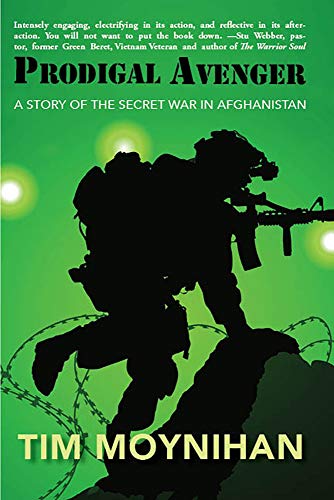
Novel Review: Prodigal Avenger: A Story of the Secret War in Afghanistan by Tim Monynihan

 I reviewed this novel on 17/02/19 in another blog, now defunct. 

 
A Covert Rescue Mission No One Expects to Succeed--Who will survive?
 
Special operator and "nice Jewish kid from Hawaii," Jake "Snake" Drecker, is intent on a mission across borders to eliminate a brutal terrorist cell. That they may or may not also be holding an American missionary hostage is unclear. The intelligence is sketchy, the objectives vague, and the chance of success slim. Jake's boss and old friend, Lieutenant Colonel Mike "Pancho" Sanchez, wonders at the mysterious motivation behind his best soldier's decisions--and about an equally mysterious rogue military unit that shows up at the worst moments to insert itself into their operations. That the CIA seems willing to sacrifice both Drecker's team and the hostage only adds to the mystery, forcing Pancho to dig deep to discover the truth behind the missionary's past. And time is running out as Drecker drags his team on a quixotic rescue operation into the very belly of the beast--a mission Drecker and Pancho both know they cannot survive unscathed.
 

Perspective by Peter:

When I first read No Greater Love: An Afghan Memoir, I was very impressed with this novella. This novella launched Moynihan as a newly published author. You would never know from reading this novel.

Now he has returned with his new novel, Prodigal Avenger. I am so glad to see this as a full-length novel. He has more than shown he can write a full-length novel. And it has not affected his writing style or any aspect of his ability to tell a story. To me, it appears he has come into his own with the length of this one.

Moynihan designed both novels as standalone. But, if you want to read them to enjoy the connection to the characters and the military world Moynihan has created, Prodigal Avenger needs to be read first followed by No Greater Love.

It was great to welcome back Lieutenant Colonel Mike "Pancho" Sanchez from No Greater Love. I had a soft spot for him from that novel, so was looking forward to seeing what lay in store for him in this new one. I was not disappointed. Moynihan has developed him further in this novel. Here we see more of the depth of his personality and character but also of his faith and relationship with Christ. But, we also see more of his military expertise that was not so evident in No Greater Love. And guess what? In both novels, I kept thinking that what I was seeing was Sanchez being modelled after the author and based on his military experiences! Not only that, but I kept seeing him as a Pastor figure! Sanchez hollers from Hawaii and the author has lived and planted a church in Honolulu. From a conversation with the author, he has confirmed that he has based Sanchez on parts of himself! Moynihan is also a Pastor. This is what makes this novel so real and relatable; real faith, believable characters, the military environment depicted as it is. And a touch of the supernatural! What better platform to depict all this than from the author's experience! Sometimes, writing based on what you know can be an author's greatest asset! In this novel and the previous one, it is that and more.

I loved the two brothers in No Greater Love, Danny and Zach Taylor, and Sanchez's relationship/mentoring of them. And Prodigal Avenger continues wiht this mentoring with a new character, Jake Drecker, who is an old friend of Sanchez'. Moynihan is on a winner with this character. He is a man's man, an action figure who has a depth of character like Sanchez, loyalty and is very patriotic. What you see is what you get. But where Sanchez stands apart from Jake is that he has faith and a relationship with the living Christ and Jake does not (well, not yet, anyway!). Both have integrity in all they do as a reflection of their character. Yet, Sanchez's has the added quality of being submitted to the Spirit and His transforming power of our heart, mind and soul.

I have already stated that Moynihan has based both novels on his faith, military experience and expertise. The same can be said for the spiritual elements of this novel. Moynihan has depicted Sanchez with how he had responded to the spiritual issues being a Christian in the military as he experienced them. His reactions to all aspects of the mission in front of them also showed his Pastor's heart is a strong basis for this. I find this impressive and it this that makes this novel shine with the others that I have already stated. Depicting Sanchez offering up heartfelt prayer supplication and requests for Divine guidance was encouraging and uplifting to my faith. I dislike the practice of Christian readers criticising authors for including actual prayers. Yet they applaud the author for depicting every other spiritual aspect as it is. Why not the prayer then? That is how it is and what Christians need to do. It also is a powerful witness to any unbeliever who may be reading the novel. I applaud Moynihan for not compromising on this and depicting as it is and being true to what the Spirit has guided him to do in his novels.

Moynihan depicts realistically the Christlike attitude and behaviour of Isidore Loewenthal and what it is like to suffer for Christ based on his faith and these characteristics. Yet, Loewenthal was persecuted in this novel for not being a Christian but being a Jew. It was this hatred for Jews that motivated his kidnapping and proposed execution. The plotline that showed him witnessing to Ali being a Muslim was heartfelt, impressive and Spirit led. From that discussion I mentioned having with the author, it is obvious that this is an example of the author's experience ministering to Muslims in his time in the military and mission trips to Pakistan and around the world since leaving the military. Again, it uplifted my spirit and faith but also challenged me!

This aforementioned plot line is an interesting and compelling one. I was taken by how Moynihan developed this. I was tense throughout the entire account of Ali being conflicted in his outward behaviour as a Muslim while trying to hide the joy and peace he experienced inwardly as a new Christian! The reasons why he had to do this evoked in me this tension. I understood his dilemma, if he was found out, he would be killed or even tortured beforehand. I was horrified when he then betrayed Loewenthal leading to his capture and torture! I wondered why he did this. Yet again, this is the dilemma Muslims who become Christian have to face against the Muslim world they now feel spiritually freed from but still physically bound to. But Moynihan showed the Christian response (based on Christ response to similar in the Bible) by Loewenthal responding with understanding compassion and love towards Ali! That is a sobering question to Christians and a real test of our faith and relationship with Christ. It was this very attitude and behaviour that was such a powerful witness to Jake when he was captured and tortured. And it was this that also helped Jake comes to terms with the relationship with his past and his father. It also encouraged him to consider the spiritual implications of this witness.

Speaking of this character, Moynihan has left it open for a sequel as the reader wonders at the end of the novel, what happens to Jake? Does he go on to other missions, what does he do with the spiritual input and witness from his wife, Sanchez, Loewenthal and the mystery and a coded message he receives while in hospital? Supernatural involvement? The question of this message and who sent it, I pray is explained in a future novel. Besides this, Moynihan had developed this character to be so relational that you are rooting for him throughout the novel. Like Sanchez, Loewenthal and Ali, you are with them as they experience all the highs, lows, challenges, successes and failures of life in a terrorist environment provokes.

I also want to know what happens to Ali? After betraying Loewenthal to the terrorists, Moynihan does not follow through with him. What happens to him after this? Does he fall back to his Muslim roots or does he repent of his betrayal, and embrace Christianity and live out his new found faith? The author is considering his fate for a future novel. It is a wait and see for this character and plot line. Again, to me it, leads another opening to a sequel.

The only other loose end, at least from my view, is that the two instances where the goat shepherds were present at crucial times of terrorist activity, these two separate missions were about to go pear-shaped and were prevented from doing so by these shepherds. Who are they? Clandestine Israeli military unit called Mista'arvim or supernatural messengers sent by God? This is one loose end I could leave as unexplained as it does not affect the plot or the final outcome of the novel as such and I am happy to accept either of these two scenarios. But my liking for the supernatural, makes me lean towards this being the explanation.

Moynihan has this to say about the supernatural/spiritual aspects of his novels,

But unlike, (our) good friend, Joe Courtemanche, I keep the spiritual stuff behind the veil and prefer to write psychological potboilers. Sort of like the way the Book of Esther is written in the Old Testament. God is barely mentioned but you can see His hand in all the events. What the Puritans called "Providence."

Reflecting on his novels, Moynihan has created them based on the faith of the Christian characters and their relationship with God. Their interaction being more of a "vertical" relationship from them to God. The Christian character lives out their faith in whatever situation they are in, employing Christian principles, attitudes and behaviour and asking for Divine intervention through prayer or it being manifested via the counsel of other Christians. Nothing wrong with this. He succeeds well in depicting it like this. 

One last aspect of this novel where Moynihan excels is the worldbuilding of the military environment. It is not over the top with military terminology or jargon, he has considered his readers in this with the provision of a Glossary of Terms. Unfortunately, I did not realise it was at the back of the novel or to even consider it to be there and I did struggle with a few of them. I was thankful for the dictionary function of the Kindle! From a comment on Facebook from a fellow retired military Christian author known to Moynihan and I, this reader confirms that this military depiction is very realistic and as it is. This forms a solid foundation that this novel is built upon. Moynihan is committed to telling it as it is on all levels and aspects so this is an asset to his writing and storytelling. One any reader will be able to trust.

I look forward even more to further works of Moynihan's worldbuilding since the release of Prodigal Avenger. He has indicated some of this to whet our appetites,

The sequel to both novels is called Double Tap Angel and will take place after both of them.

I have considered a non-linear series (sort of like Star Wars) based around the real time history of the War on Terror which I perceive to be a spiritual war in the heavenly realm.

I pray he delivers all this, from our conversation, he has a wealth of material from his military experience and Christian missions to the Muslim countries where he has ministered the Gospel.

I really appreciate reading novels like this where the author is under the guidance of the Spirit and does not compromise any spiritual standard that would work to water down the Gospel or give readers what they want and not what the Spirit wants.

In this age that is fast moving to Jesus' second coming and the end of this age, it is vital that we have Christian authors who write uncompromised like this.

I am very impressed with this novel. I pray that we do not have long to wait for the continuation of this series or the real-time history of the War on Terror that he has planned.

Highly Recommended.

To buy or preview this novel, click on the BUY/PREVIEW icon below:

Readers and reviews are an author’s best asset, so I encourage any reader, to consider reading Prodigal Avenger and submit a review on Goodreads, Amazon, Barnes and Noble, and on Twitter, Facebook, Instagram, Pinterest (or any other social media you subscribe to).

Reviews help promote an author’s novel to potential readers and encourage the author to keep writing. Reviews also help get the author’s message (and God’s message) to the reader, whether Christian or not, who may need encouragement and support in their lives while being entertained by the story.

Please note: As an Amazon Associate, I am required to disclose that book cover images or titles of novels in this post are paid links if they are linked to Amazon and result in a sale.

Novel Review: Solomon's Dreams: The Hunting at Huntington by Eric Suddoth.

I reviewed this novel on 11/03/19 in another blog, now defunct. 


Solomon “Solo” Davis is a man of faith, but even for him not all things are easily believable. How quickly his life is turned upside when he comes face to face with one of his doubts. After a chance encounter at a dinner party his dreams start happening. Can he believe in something that is so impossible?

Are his murderous dreams of a killing duo a coincidence?
Or are they revelations to help save tomorrows victims?

He must decide to either believe and try to do something or ignore and do nothing.

Not all dreams need to come true…some are deadly.

Perspective by Peter: 

I was asked by the author to review this novel last year, but due to a busy review schedule, I only go to it now.

I enjoyed this novel more than I thought I would. What influenced this was reading was two particular reviews on Goodreads. These reviewers were critical of Suddoth's construction of the novel, too many chapters, too much telling and not enough showing, incorrect procedures used by the Coast Guard and inappropriate behaviour and unprofessionalism displayed by two Officers, both of them lesser main characters.

There is the saying, "The Power of a Review!". This is very true. This power of the reviewer's words can have a positive and encouraging effect on a potential reader or the opposite. For me, it had the latter. I started this novel with a pre-conceived idea of what I was going to experience based on those two reviews. I hate that!  Would I have still read it if I was not asked by the author to read it? Good question. I can answer that I would have. I have the attitude that because a review is subjective, I might not find those issues as I read that novel. I have found this to be true many times before. What started out as a negative impression from a reviewer or from some other source that influenced my attitude before reading the novel has turned out to be not the case for me as I read it. I actually experienced the opposite! I can say also that there would be readers who would not agree with my reviews when I show positive, encouraging or not so positive content. Subjectivity wins the game every time!

For Suddoth's novel, I can say that I did not experience these negative issues from these two aforementioned reviewers. If there was telling and not showing, this writing breach did not have the effect that it is described as doing: not enabling the reader to be engaged with the characters and plot. I looked out for evidence of this breach but did not find them. Maybe the intrigue and suspense kept me distracted from this. Maybe I am not proficient at identifying when telling or showing exists (the latter being the standard in effective authorship)! However, I was still engaged with the characters and the plot. I was not just an observer but was as if I was there with Solomon and experienced what he did. I was not aware of the incorrect procedure followed by the Coast Guard as I (and most likely the majority of readers) would not be aware of this breach unless you knew how the CG operated or specifically what particular code was breached (the aforementioned reviewer quoted the actual Title and Section of the United States Code pertaining to Law Enforcement).

The author should have researched this latter issue. Absolutely. If he did but then deliberately used poetic licence on this CG procedure to advance the plotline involving one of the main characters, then that is a risk the author takes. If it comes back to bite him, then he has learnt a valuable lesson on doing this next time.

Yes, I picked up the personality clash between the two Police Officers and maybe again, Suddoth has deliberately used poetic licence here to show the tension between Officers when they are under pressure to solve an increasing murder rate from prolific serial killers (The Carbon Monoxide Killers). It did add suspense and showed that these clashes are normal and expected from human interaction and people just being people. This happens in all walks of life and in relationships. I have seen this depiction between officers in many TV shows and movies. That is not to say that it should be continually depicted like this, but it is. And yes, I do appreciate it when an author adheres to and depicts the reality of these things in their novels. There is an art to poetic licence in doing it well, readers do not want to go from the sublime to the ridiculous!

For a début novel, Suddoth has made a positive impression. He writes well, he has structured the novel to flow well, there are not many peaks or troughs that slow the pace and result in disengagement for the reader. You never knew what to expect next.

I loved the speculative theme, 

What if your dreams of last night…

“Top story tonight,” read the senior news anchor. Solo held his breath, waiting to hear about the kidnapping or the death of the older couple. He had already had two of his dreams strangely come true with frightening detail, and he couldn’t help but wonder if it was some cosmic coincidence; a million to one chance that all his dreams actually occurred. Could this really be happening?

Became your reality for today?

This forms the basis for the suspense, action and plot developments throughout the novel. Suddoth has set this against a plotline involving serial killers and how his dream based premonitions contribute to ceasing the serial killings and exposing the killers. However, Suddoth has another major plotline running along this one. One of his premonitions affects him deeply where he acts alone in solving the crime committed in one of these dreams. 

It is here and in other dreams sequences that I get concerned about this novel and the spiritual basis of it. This is not directed at the plotline at all or the characters. It directly relates to where the main character gets his ability to have premonitional dreams. Suddoth does not state directly that the ability to have these dreams is a gift from God. The only associations he includes are the following, 

I didn't understand how it was her fault, but if getting these dreams saved my best friend's life, I will take them as a gift from God. 

and

Once I say without a doubt that God cannot use signs or dreams, I am basically telling God that he can't do something. So, I have come to realize that in my arrogance, I was belittling God's mysterious ways. So, yes, I belive God can use these mystical dreams or signs. That God can speak through visions or revelations. That God can use mere men, who are but mists in a rainstorm, to give some insight on what He wants them to do. Once I say that God can't do that, I am as faithless as...... (referring to Jeremiah, one of his atheistic friends)

This attitude of not knowing that they are a gift from God is where I have my concern. The novel's description states that Solomon is a man of faith,

Solomon “Solo” Davis is a man of faith, but even for him not all things are believable. How quickly his life is turned upside when he comes face to face with one of his doubts. Can he believe in something that is so impossible?

As a believer, our faith reinforces that we serve a supernatural God. Plenty of examples in the Bible and in the testimony of others, Christian and non-Christian alike, of this supernaturalism in the circumstances people have found themselves in that defy science and physics. Plenty of examples of supernatural gifting that are described in the Bible is given to Christians in the early church and that continue to be given today. So based on this, why does the author not connect this ability/gifting of these premonitional dreams of being from God seeing he is a believer? And if this was so, would not then he be in prayer specifically asking how to act on these dreams, either just after receiving them or in the hours, days after? I would consider this to be part of walking in the Spirit as the Bible encourages us to do or seeking His guidance as to act as again, the Bible encourages us to do!

Another concern I have is that by Suddoth having Sol say that God can use these "signs or dreams, these mystical dreams or signs, visions or revelations", this does not attribute them as being from God. If not, where do they come from? They are not common to the majority of the population or part of our physical and mental function. If we believe God is the Creator, then all things have been created by Him and for Him. Not attributing the occurrence of these premonitional dreams to God, weakens Suddoth's depiction of the supernatural elements of this novel as being from God or that Sol needed to act on them solely based on how God would encourage him to act, rather than his actions on them being in his own strength and in his judgement or sometimes on an emotional whim, impulsively.

Yes, constructing the novel in this way, i.e lack of definite divine attribution (of Sol's ability to have premonitional dreams) and seeking divine guidance does contribute to the suspense and action of the plot. Yes, it does draw the reader in further, yes, it does make you think what would I do in Sol's place? Would I react the same? But, if as a believer, in a relationship with God, then any ability and talent they have originated from God and due to this relationship, they would be wanting to use this ability His way by seeking His guidance and acting on it in the aftermath of receiving the premonitional dream.

However, there would have been just as much or more suspense, action if this novel had been crafted as outlined above. I could see it is not just entertaining but strengthening of the Christian's faith, uplifting as well, educating in spiritual warfare, a positive witness of who God is; His Sovereignty, Omniscience, Omnipotent, Omnipresence. It would also show the importance of living and acting in accordance with His Will, being obedient and surrendered to Him as part of this process and not acting in one's own strength but in God's. Again, this is what His Word (Bible) instructs us to do.

To help Sol understand where his dreams are coming from, Suddoth introduces another character with the same ability and experience as Sol, but this character has had them for years while Sol has only had his for a short time. This is effective in seeing how someone else deals with this phenomenon but it only helps Sol to a point as he realises that he cannot deal with them the way that the other character has. It even ends up with this character developing a better understanding of this phenomenon by assisting Sol in how he is understanding his experiences. However, it is here that the difference faith made between them both. While this other character took a more passive attitude towards these dreams and in doing so did not risk her physical and emotional safety, Sol took the opposite, his was one of action, impulsiveness and believing that he needed to exact a positive outcome as doing nothing invalidates the reason for having them in the first place. He felt it was the right thing to do. What a team they did make when they worked together in acting on the dreams they both had! 

I kept thinking throughout this novel that because Suddoth has constructed this novel with no direct and confirmed connection of Sol's ability to have these dreams being God-given and his follow through based on God's direction, then why depict Sol as a man of faith, a Christian? It would have still been a suspenseful, action-packed and fast-paced if Sol was not depicted as a Christian. It just would have lacked some of the depth of the why and the who on their occurrence and less of a supernatural thriller.

However, this would have meant that Suddoth would not have included the other Christian/Biblical themes of forgiveness and the theological debate about whether God exists as he has in the narratives between himself and Jeremiah.

Suddoth has handled these well, I loved the theme of forgiveness here. Sol's testimony to another character as to why he forgave the murderer of his wife is a powerful narrative and shows the power of forgiveness and what it does for the person forgiving the other. This Biblical principle is depicted as it should be based on its origin (Jesus and the Bible) and does encourage and strengthen one's faith and challenges all of us, especially Christians, why we need to forgive and how this will not hinder our relationship with others but especially with God. And what a great witness this is to the unbeliever or those seeking Him. This latter was depicted as realistically as possible and as I have typically seen in others as depicted in the reactions of Isaac and Amanda Fiddlestein when Sol suggested they forgive the perpetrator and the positive effects it has on their lives and enables them to move on positively in their lives free from the bitterness and anger that unforgiveness imprisons them in. Sol bases this on his faith and his own experience from when he forgave his wife's killer. 

Suddoth has also depicted well how to have a friendship with an atheist and have a healthy debate about whether God exists or not, without coming across as being judgemental, critical or pompous, which unfortunately is a true criticism against Christians. I applaud Suddoth for depicting Sol like this to represent an effective witness of Christianity and Christ towards those who do not believe.

I must confess, I do not like novels where the author depicts many instances of how the victims are murdered. I was hoping that Suddoth would show this only in the first instance so the reader would then know how the next victims are murdered This would not deter how they obtained their murderous moniker, The Carbon Monoxide Killers. Multiple instances and details of how someone is murdered produces too much anxiety and tension in me while reading this. I hate these descriptions but understand that they are necessary to a point in the creation of a novel that involves a serial killer or to add suspense, mystery and the curiosity of a "whodunnit?".

Suddoth has definitely mastered this side of being a novelist. He set up the method of killing, the influences and reasons why the two engaged in this destructive and evil behaviour without providing too much of these from their past that encouraged this way of life without it bordering on being an exposé of A Criminal Mind TV episode! This plotline was a major one that dominated the novel while surfacing in all its suspense and thriller-ness between the subplots of Sol investigating his dreams and deciding what to do with them, coping with the loss of his wife, developing a friendship with Elizabeth and Jeremiah and a potential romance with Jennifer. My anxiety lessened when I read of these subplots and heightened when Suddoth returned me to the chapters about The Carbon Monoxide Killers.

As with any suspenseful and thriller mystery, the author had all the plotlines converge together to create one deepening and heart racing conclusion. So it was with this one. It is edge of your seat reading and the icing on the cake was the twist at the end that I did not perceive. And just when you get over that one, Suddoth adds one more!

All in all, this is one satisfying novel. This author shows a lot of potential for mastering this craft of novel-writing. This is an encouraging start. I do look forward to more from him. I pray he develops the Christian/Biblical aspects better in subsequent novels. 

Strongly Recommended. 

To buy or preview this novel, click on the link below to Buy or Preview icon below: 
Readers and reviews are an author’s best asset, so I encourage any reader, to consider reading Solomon's Dreams and submit a review on Goodreads, Amazon, Barnes and Noble, and on Twitter, Facebook, Instagram, Pinterest (or any other social media you subscribe to).

Reviews help promote an author’s novel to potential readers and encourage the author to keep writing. Reviews also help get the author’s message (and God’s message) to the reader, whether Christian or not, who may need encouragement and support in their lives while being entertained by the story.

Please note: As an Amazon Associate, I am required to disclose that book cover images or titles of novels in this post are paid links if they are linked to Amazon and result in a sale.

Tuesday, 6 September 2022

Novel Review: Ashes Like Bread: A Biblical Novel of Lamech and His Two Wives (Thrones of Genesis Series Book 1) by Jean Hoefling.

 I reviewed this novel on 30/03/19 in another blog, now defunct. 

Ashes Like Bread: A Biblical Novel of Lamech and His Two Wives (Thrones of Genesis Series Book 1)

A scorned prophetess. A deadly omen. Will this kinswoman of Adam and Eve persevere with intuition she can’t deny?

Zyla is used to the elders of the clan rejecting her dark glimpses into the future, and bitter that she doesn’t receive the honor she deserves. When her forecast of a terrible flood gets her exiled, she and her sister flee the mountain of Eden to live among evil descendants of the murderer Cain. There, Zyla is willing to do anything to advance her status, even if it means becoming a second wife to her sister's desirable husband, or aligning with forbidden spiritual powers.

When the flood Zyla prophesied slams into her new home, the outcast must decide whom she really loves and what is worth risking death for. Will she be strong enough to find hope on the other side of the waters, or will the devastation sweep her and her prophecies away forever?

If you like ancient legends and dramatic Old Testament re-imaginings, you'll love this biblical fiction novel based on a story from Genesis 4. Buy Ashes Like Bread today to see the distant past through a prophet’s eyes!

Perspective by Peter: 

I was asked by the author to review this novel. 

This story is based on the account of Lamech and his two wives from Genesis 4: 17-24, Adah and Zillah. Hoefling has spelt Zillah as Zyla and has used the background from The Book of Jasher (2: 12,15-16) that directly shows her as a daughter of Kenan (also known as Cainan in this book and in other records), 

15 And when Cainan was seventy years old, he begat three sons and two daughters.

16 And these are the names of the children of Cainan; the name of the first born Mahlallel, the second Enan, and the third Mered, and their sisters were Adah and Zillah; these are the five children of Cainan that were born to him.

whereas the Bible does not and just says that Kenan had other sons and daughters as stated in Genesis 5:12, 

12 Kenan was 70 years old when he fathered Mahalalel. 13 Kenan lived 840 years after the birth of Mahalalel, and he fathered other sons and daughters. 14 So Kenan’s life lasted 910 years; then he died.

I needed to see this visually. A family tree is always good for this purpose so I discovered this (from Wikipedia) about Kenan and his family. This certainly helps me visualise what the author has included in her novel. 

When I started reading this novel, the first thing that hit me was how well-written this is. Hoefling has an excellent and competent command of the English language and executes it to its full potential. This enhances the novel and progresses the plot smoothly and seamlessly. This is especially evident in the first-person narrative of Zyla. You will definitely get to know her very well from this. I have found that using this first-person narrative is either used well or not by authors and I can see why readers do not like this type of narrative. I used to dislike it immensely but after reading a few novels where it is executed well, I have come to like it and see its specific value in a novel. 

I admire author's like Hoefling who set about to fill in the gaps or re-imagine what life would have been like in the times of the Bible where it does not give enough specifics as to what life was like at that time. It is not supposed to or else the Bible would have many volumes and to get to what God wanted us to know about Himself, our purpose here on earth, and how to live according to His tenets and doctrines would be counterproductive. These re-imagings definitely make it edgy and speculative and definitely draw you in. 

I can see that using poetic license here to re-imagine these gaps would either support the existing biblical accounts or take them on a tangent that would either mock or undermine the latter. I must confess I almost expected this to be the case with this novel. When I read one review that criticised the novel and the author for including a Cain who was delusional and lusting after a female fallen angel, my radar was activated. I approached this novel with a preconceived idea of what I would expect based on this. I do agree with that reviewer but only to a point. The Bible does not specify whether angels are male or female but due to the names of some, Michael, Gabriel, and Lucifer, these are referred to in the masculine. Other angels are referred to in the masculine sense even though they are not named. As Matt Slick from CARM states,

One of the possible reasons angels could be referred to only in the masculine is that of the issue of authority and strength. Generally, the male gender is associated with authority and strength more than the female gender.

This reviewer's point is a valid one where she states that if there were female fallen angels then why would male fallen angels need to procreate with human females when they could produce their own offspring and leave human females alone? This would still be an abomination to God just like the Genesis 6:4 account. Maybe this is why God did not create female angels? Hoefling's poetic license here could be interpreted as undermining the biblical account of Genesis 6:4,

4 The Nephilim were on the earth both in those days and afterward, when the sons of God came to the daughters of mankind, who bore children to them. They were the powerful men of old, the famous men.

(Holman Christian Standard Bible, Biblegateway.com)

Now, I have not read the previous novel in this series, Gold in Havilah, where,

Cain spirals into ever-deepening tiers of delusion through his bondage to a beautiful fallen angel 

to quote that novel's description. It seems in this novel that Hoefling may be expanding on the female fallen angel concept. I will have to read and find out. I found it interesting that this same reviewer also mentions the Bible hinting as to the presence of female angels in Zechariah 5:19, but Matt Slick again addresses this,

The context of Zechariah 5 is a series of visions. It is the sixth vision in which verse nine is delivered.

  • Verse 1, a flying scroll
  • Verse 2, its dimensions are 20 cubits long and its width 10 cubits
  • Verses 3-4, the scroll represents a curse upon those who steal and those who swear falsely by God's name
  • Verse 5-8, a woman is personified as wickedness
  • Verse 9, two women coming out with the wind in their wings
  • Verse 10-11, the women are going to build a temple

So, contextually the figures spoken of in verse 9 are not angels. They are representative of wickedness and are not dealing with angels. Therefore, we can see that universally in Scripture angels are referred to in the masculine and not the feminine even though the Bible does not tell us why this is so.

And Slick continues,

We do not know for sure if angels can have sexual relations with women because the Bible doesn't tell us. Nevertheless, some Christians think it is possible, and others do not. Various scriptures are used for both sides of the argument. Let's take a look at some of them.

  • Matt. 22:30, "For in the resurrection they neither marry, nor are given in marriage, but are like angels in heaven."
  • Luke 20:34-36, "The sons of this age marry and are given in marriage, 35 but those who are considered worthy to attain to that age and the resurrection from the dead, neither marry, nor are given in marriage; 36 for neither can they die anymore, for they are like angels, and are sons of God, being sons of the resurrection."
  • Gen. 6:1-4, "Now it came about, when men began to multiply on the face of the land, and daughters were born to them, 2 that the sons of God saw that the daughters of men were beautiful; and they took wives for themselves, whomever they chose. 3 Then the Lord said, 'My Spirit shall not strive with man forever, because he also is flesh; nevertheless his days shall be one hundred and twenty years.' 4 The Nephilim were on the earth in those days, and also afterward, when the sons of God came in to the daughters of men, and they bore children to them. Those were the mighty men who were of old, men of renown."

We can see from Matt. 22:30 and Luke 20:34-36 that angels do not marry, but this does not mean they can't take human form and have relations. I am not advocating that they do have sexual relations with people, but I am simply stating that we cannot assert either position from this passage especially when the Bible tells us that people have entertained angels without even knowing it (Heb. 13:2). This means that angels can take on human appearance to such a convincing state that they can't be distinguished from people. If this is the case, then it would seem logical that an angel (a fallen one) could imitate a human physical form including the sexual organs. On the other hand, I see no biblical support for such a manifestation of fallen angels in human form. Therefore, we are still left without an absolute answer.

Gen. 6:1-4 above is a more controversial passage. The question is: Who are the sons of God? Are they angels or people? Some commentators think that the Sons of God were the descendants of Seth:

"By the former is meant the family of Seth, who were professedly religious; by the latter, the descendants of apostate Cain. Mixed marriages between parties of opposite principles and practice were necessarily sources of extensive corruption. The women, religious themselves, would as wives and mothers exert an influence fatal to the existence of religion in their household, and consequently the people of that later age sank to the lowest depravity."1

Other commentators teach that the Sons of God were angels since the term "Sons of God" is used elsewhere to refer to angels as the following scriptures suggest:

  • Job 1:6, "Now there was a day when the sons of God came to present themselves before the Lord, and Satan also came among them."
  • Job 38:7, "When the morning stars sang together, and all the sons of God shouted for joy?"

However, the term "sons of God" also refers to Christians in the New Testament, as Gal. 3:26states, "For you are all sons of God through faith in Christ Jesus." Since the question at hand deals with an Old Testament scripture, we must examine the context of that particular scripture to see how it is used.

Whichever the case, we do not know the abilities of angels. Given that they are very powerful and intelligent creatures, it is possible that they could manifest themselves as humans. This has been verified in scripture as we see from the following passage: "Do not neglect to show hospitality to strangers, for by this some have entertained angels without knowing it." (Heb. 13:2). Since they can appear in human form unbeknownst to people, it seems that a fallen angel manifesting itself in human form would be able to have sexual relations with a person.

  • 1.Jamieson, R., A. R. Fauss

So based on this, I can only speculate that if angels could manifest as male and have sexual relations with human females, could they also manifest as female and have sex with human males? Very speculative indeed! I have not conversed with the author of these novels but it would be interesting to find out her thoughts on this and what evidence, if any, she has based Gold in Havilah on this concept with its minor carryover into this sequel, Ashes Like Bread. 

Hoefling only mentions Cain's obsession with Lilith, the aforementioned female fallen angel, in Ashes Like Bread, a few times and it plays no major plot arc other than to be a small part of the history of Cain as it pertains to Zyla learning about Cain's life after he was banished by God from Eden for his sin of committing the first murder, that of his brother Abel. Thus, Hoefling has not deviated on a tangent here.

While speaking of this re-imagining of life in the Cain camp after he was banished from Eden, Hoefling transports you to the life of Cain and his descendants and the life they create for themselves. It is very convincing and one that illustrates what a life, even in the 21st century, is like when it is based not on God, but on any other god or spirit that presents itself in deception over the unsuspecting. Zyla noticed this immediately after she arrived in Cain's city. The people seem dull and followed more of their base natures, which spiritually is regarded as their sinful, fallen nature. They also were very subservient to their gods whether they considered them beneficent or maleficent. Hoefling's account of Zyla's life amongst Cain's descendants successfully shows what life is like when a society has strayed from their higher calling and purpose from God and live not according to His standards, and have abandoned their relationship with Him or just do not know any better. 

I read with interest Zyla's journey from being scorned by her people for being a prophetess. In their culture and belief system, this role was seen and expected to be part of the male line. Ignored and excluded from many relationships with others in this community, and treated as though her visions are demonic in origin, she leaves Adam's city on the mountain and settles in Cain's community. Not only did her father and aunt deny her abilities to function as expected in their community, however, Zyla, never gave up on her abilities and responsibilities and continued to act as a surrogate mother to Adah when their mother, Mual (Mualeleth in the extrabiblical record, Book of Jubilees) died.

At first, I wondered why Zyla would leave this community that still had the covering of God and whose leadership of Adam and male relatives ensured the community lived according to what God had instilled in them. Then I realised that she had very little option as to where to go. Most of the other communities were too far away and the closest was that of Cain. And to stay with the only family that had not rejected her, Adah, she left with her to follow Adah's future life with Lamech and to ensure that this marriage of these two would be according to the tradition of the Sethites and God to be honoured in this as well. I also wondered where was her faith that she would leave based on the way her family and community had treated her? But the author had to follow what the Biblical record stated as history, that she married Lamech of Cain's community. So everything leading up to this was the author filling in the gaps from the Biblical record and from the other extrabiblical texts mentioned. 

Hoefling is a master at creating the environment, the relationships, the culture, and being true to what we know of the Biblical record. In doing so, she creates a novel that is engaging, all-engrossing, and more importantly, honours God and does not show Him to be any less than what the Bible reveals Him to be. This I appreciated. This account of Adah and Zyla in Cain's city and the descriptions of their lives, cultures, and religious practices borders on being dark but is definitely demonic as their worship of the gods is purely of those fallen angels. Only one of these is named, in this novel and is first mentioned in the Book of Enoch. 

I can understand some readers having negative reactions to the depictions of sex and sensuality but despite what a reviewer has stated about the repulsive sex scenes, I wondered what she was talking about. Readers must remember that this author is depicting life in a community that is devoid of God, His precepts and tenets, and the true meaning and purpose of sex that is designed by Him to only be between a married man and woman. In Cain's community, sex and sexuality are used as a means to an end and as an expression of one's base nature. In this community, you could have one wife for reproduction and one for sexual pleasure. In this novel, Adah was for the former and Zyla for the latter. The only thing that I could say was explicit was the frequency that Lamech had relations with his wives, but there were no explicit details or graphic descriptions. Hoefling only depicted this community as it most likely was. 

Hoefling describes well how conflicted both Adah and Zyla are in their adoptive community and what they have to give up, compromise, and even betray each other in order to survive. But it is almost as if a supernatural drawing from God, changes their hearts and attitudes and they both re-embrace their faith in God and leave the city of Cain, one returns to Adam's community while the other seeks a future elsewhere. And the former will be continued in the next installment which is all about Mahalalel, Zyla's brother from the subplot that started in this novel. 

Hoefling has explored this world of early mankind and brought it alive with research, clever use of poetic license, and imagination. This has given it a plausible and believable version of life that effectively fills in the gaps in the Biblical record. For me, I found this has not detracted from this record, undermined it, or lessened its impact or authority. Any Christian author should have this as their aim when writing Christian fiction. It needs to support and promote the Biblical account and the power and authority it contains. 

I look forward to reading Gold in Havilah and the next installment in this series, Watchers that deals with Mahalalel as mentioned above.

Strongly Recommended. 

To buy or preview this novel, click on the icon below:

Readers and reviews are an author’s best asset, so I encourage any reader, to consider reading Ashes Like Bread and submit a review on Goodreads, Amazon, Barnes and Noble, and on Twitter, Facebook, Instagram, Pinterest (or any other social media you subscribe to).

Reviews help promote an author’s novel to potential readers and encourage the author to keep writing. Reviews also help get the author’s message (and God’s message) to the reader, whether Christian or not, who may need encouragement and support in their lives while being entertained by the story.

Please note: As an Amazon Associate, I am required to disclose that book cover images or titles of novels in this post are paid links if they are linked to Amazon and result in a sale.

Novel Review and Pre-Christian Godliness Fiction Award: Refuge (A Biblical Story of Good and Evil) by Melinda Viergever Inman.

 I reviewed this novel on 08/04/19 in another blog, now defunct. 

Refuge (A Biblical Story of Good and Evil)

Intent on total destruction, Satan notices Cain's obsessive lust for Lilith and the dark roots of jealousy growing deep in his soul toward his do-gooding brother Abel. Satan goads Cain to the point of madness, barraging his mind with thoughts of hatred, lust, and futility. In a blinding rage, Cain wrecks everything. 

Wracked with shame, he flees into the vast wilderness, unable to possess the one thing he truly desires---Lilith. His life is destroyed. Will he ever find his way back? He longs for refuge. Can he ever find God again?
 

Perspective by Peter: 

After reading Inman's other novel, Fallen, I have looked forward to reading this debut novel. I deliberately did it this way as I wanted to read them in order of the Biblical account of events. I absolutely loved Fallen and it had such a profound impact on me. 

Now Refuge is having the same effect. I am so glad to be back reading a novel in this series and also by this author! It is like coming home to a safe place, a secure place, a "Refuge!". Why do I say that? Well, when you read an Inman novel you hear from God. I felt His presence as I was reading. Reading both of Inman's novels induces a feeling of heartfelt peace. It reinforces your relationship with God. I had feelings of joy, appreciation, and thanksgiving towards Him for who He is and what He has done for me while reading this novel. Biblical principles are included and form a solid basis and foundation for this novel. I appreciate Inman's research (documented as a study guide at the end of the novel) and how it is interpreted and applied to the novel. It then forms another of its strong foundations. But more importantly, you know that she would not have applied this or any other element of this novel without having committed it to God and asked for His direction. He delivers! 

This is a very spiritual novel. It is not like another I have read, where it is more concerned about the events from the Biblical account and its poetic license in filling in the gaps of this time in the Bible and less on the spiritual aspects. This is the difference between novels like this. Inman writes from the spiritual aspect of who God is, what He has done for us and His reasons for doing so, why He has established His precepts, boundaries, and what He has as a solution for every action, whether pleasing to Him or not. Everything is based on Who He is and that He loves us with an unfathomable love.

I have often said in reviews that a novel reflects what an author's relationship is like by reading their novel. Both in Fallen and Refuge, Inman shows an obvious love for God. Her talent for writing and creating a story forms the platform for the Spirit to use this to deliver a message of love, forgiveness, redemption, salvation, and mercy. And Refuge and Fallen are novels that are resplendent with this. 

I stated in my review of Fallen that, 

This is a beautiful and tender novel. There are novels where the reader can feel the author pouring herself into it with the utmost passion for writing and the storyline and this novel is one of those. Having read some of Inman's Tweets, posts from Facebook and her website, she is passionate about writing, about the art of story creation, expressing her love for God and all things relating to Him. It definitely shows in this novel's construction and forms one of its foundational pillars.

Well, I can say that this applies to Refuge as well! 

I know that other reviewers have said that this novel and Fallen as well could be viewed as being close to what actually happened and I would agree. Yes, it is fiction, yes, the poetic license fills in the gaps in the Biblical record but in this novel, I have found that this latter not only enhances the Biblical record but is very much aligned to it and makes plausible sense! It does not detract from the Biblical account or undermine it. But why would it, if Inman has allowed the Spirit to have His way with this novel? It becomes His novel and not Inman's! 

To quote again from my review of Fallen, the following is appropriate to mention here 

Inman has definitely allowed the Spirit to use her talent, imagination and creativity to craft a novel that is very much God-honouring and faith strengthening. As one of my author friends states, if you are a Christian author and you believe God has mandated you to write, then write for Him. I can see that Inman definitely does this. 

If there is one thing that stood out in this novel, it is the description of Cain's shame, remorse, regret, and horror over his sin in committing the first murder and having to deal with it. This is not something that is treated cheaply or superficially by Inman. It is beautifully done, despite it being a very graphic and destructive narrative. She has depicted him with raw emotions and I do not consider that anyone reading this would find these emotions foreign. She has depicted them as we have all experienced them to some degree or another and from different circumstances. These emotions are not unique to murder only. Her account pulls at your emotions. They are very much evoked! Even leading up to this event, as I knew it would happen, being familiar with the Biblical account, I became anxious and tense about how this murder would be depicted. Inman has shown a great understanding of how sin has changed our human nature and how Satan and his forces have manipulated this for their agenda of destroying the human race as part of their rebellion against God. This understanding has been interspersed throughout the novel and reinforces how sin and its effects have taken God's creation so far from what He created and would continue to do so.

Having read a previous novel about Cain where his sin drove him mad and consumed him and he was forever separated from God through this madness, Inman shows that even though Cain deserved to be tormented by himself, (through his own emotions and reaction to what he had done), Inman takes a different tack. I was so hoping that she would not fall into the same or similar trap of depicting him like this, once he was marked by God!

The account of how Cain deals with his sin, and its effects on himself, and his family is something that Inman shines in her depiction. It is resplendent with God's love for us, even after all its forms of rebellion against Him (disobedience in Adam and Eve, murder arrogance, and self-reliance from Cain). Again poetic license is applied here in having God minister to him, sustaining him on all levels during his banishment from his family, and how He encouraged Cain to open himself to God so He could be restored to a right relationship with Him again. How my mind and heart soared reading this as it shows what real repentance and forgiveness are! It is a shining example that God's love and forgiveness are not limited to any particular sin (except the sin of blaspheming the Spirit). I pray for any reader who reads this novel, who is not a believer in God, or feels they are totally unworthy will be impacted by this message here, and a seed of salvation be planted.

What is remarkable is the two Cains we deal with in this novel. The arrogant, self-reliant, strong-willed, stubborn, and selfish Cain before his sin of murdering Abel and the transformed Cain who has overcome these flaws in his sinful nature and become a contrite, humbled, obedient, and "born again" person, definitely closer to the way God had intended man to be before sin changed human nature. Prior to his sin, he was self-focused, it is all about him, but post-restoration by God, he became people-focused placing others first and above himself. Even to the point of laying down his life to save his wife and community when some of his brothers came to avenge the death of Abel by attempting to murder him. 

This is contrasted with how Inman depicted Abel. This brother already acted as contrite and knew his flaws, his ability to sin, and not to rely on his own strength or understanding. He was the obedient one, the one who sought God in everything and for everything. I respect this depiction of Abel, but I also respected the transformed Cain.

This entire novel can be read as a study of how sin has changed us for the worst and what God's plan is for our restoration. It flows very well from its successor, Fallen, and shows how the effects of sin became greater in Adam and Eve's offspring. Having Adam and Eve's reaction to this also showed how contrite and humbled they were to this progression and their part in its initiation. It also shows and indicates that the human race cannot continue on this sinful, destructive path. From the Biblical account at this time of history, we can see that God had a solution for this and in this novel, it relates to where God states, in Genesis 3:15,

I will put hostility between you and the woman, and between your seed and her seed. He will strike your head, and you will strike his heel.

It is understandable that they thought Cain would be the one to destroy the works of Satan but from his sin, it becomes obvious that it is not him and it would need to be a "perfect" man to do this (as quoted by Cain and shown to be correct from the Bible in the account of Jesus from Isaiah 53, 1 John 2:2 and many others). Inman has depicted appropriately hints at this happening in the future. She hints at it and by whom this person is in the account of Abel being received into heaven upon his death. The study guide at the end of the novel is excellent here for more explanation to those who want or need to delve further

The spiritual warfare aspects of this novel, while not frequent, reveal more than enough about our fight against Satan and his forces. The accounts of Satan instructing his other fallen angels in how to tempt, harass, and manipulate our emotions and thus lead us to then sin could be a study in how to understand how this works against us and what we must do to prevent their dominion over us. It grieves me that this is not taught more or in greater depth by Pastors and Churches nowadays. There are many examples of the battle strategy that Satan uses that Inman has included but also of those that God uses and it is here that this study could be developed and used. The study guide at the end of the novel is a great asset here for further study.

Inman is dedicated to honouring God and His word in her writing and I was impressed to see an example of this in Fallen about becoming one flesh through the sexual union in the marriage covenant instituted by God. This was beautifully depicted in Fallen and in Refuge, Inman develops it further by showing how sin has tainted and warped sex when it is taken it outside of this covenant when Cain and Lilith become the first fornicators, who could not wait for their wedding day. They had sinned sexually and despite them considering themselves one flesh, they were not considered such by God. It was from this point on that Cain's life began to unravel further and this sexual sin was one reason God did not acknowledge his sacrifice at the altar and this led to Cain murdering his brother, Abel.  

I was intrigued as to why Inman chose to use the name Lilith for Cain's wife. There are two reasons for this, extra-biblical texts depict her as Adam's first wife before Eve was created, and not supported by any Biblical canon or text, and secondly, another novel I had read about Cain's life had Lilith as his wife's name but this wife was not human but a female fallen angel, whose existence is controversial amongst biblical scholars and apologists. Again, the study guide underpins why Inman used this name here. Kudos to Inman for researching and applying this well and appropriately without detracting from or undermining the Biblical record!

I can see some readers, Christian, as well as non-Christians, objecting to the depiction in this novel of how the offspring of Adam and Eve would find marriage partners. I had researched this myself years ago so was so pleased to see Inman supporting this research. This was ordained by God from the beginning but I can understand how Adam and Eve were clueless about this once they sinned, and were banished from the Garden and this may have been one detail not instructed by God now they were on their own and outside of His direct covering. It did make me chuckle somewhat looking at this from today's mindset, warped as it is with all our knowledge! It has only been the deterioration of the genes caused by the effects of sin on all life that has caused abnormalities in the offspring between family members and it has taken many generations before these abnormalities to be manifested, hence family members no longer being encouraged to procreate amongst themselves, even to the point of it is illegal by law and culture to do so.

I would highly recommend any reader, Christian, or not, to take the time to read the study guide at the end of the novel. There is a wealth of knowledge and resources here that will give a better understanding of this novel, its themes, who God is, and His plan of salvation. It also equips the Christian in giving an account of why we believe what we do just as 1Peter 3:15 instructs us to,

but honor the Messiah as Lord in your hearts. Always be ready to give a defence to anyone who asks you for a reason for the hope that is in you.

It is my prayer that Inman continues to create novels regarding the retelling of Biblical history that contains the direction and substance of God and His Spirit. I have a hint of this in the subtitle of this novel, A Lilith and Cain Novel. It is my prayer that Inman continues to create novels regarding the retelling of Biblical history that contains the direction and substance of God and His Spirit. I have a hint of this in the subtitle of this novel, A Lilith and Cain Novel. 

For a debut novel, Inman has hit the ground running! I do not believe that any reader would know this once they start reading this tome. She is quite the wordsmith and has applied her craft, talent, and creativity well and allowed God to have His way in delivering His message to the reader.

Highly recommended.

The three ratings below are based on my discernment:

World Building 5/5

Characters 5/5

Story 5/5

The two classifications below are based on the booklet, A Spiritual System for Rating Books by David Bergsland:

Spiritual Level 2/5

Enemy Spiritual Level 4/5

Overall Rating: 4.2/5

_______________________________________________________

Spiritually, based on my review and on the aforementioned reference booklet, A Spiritual System for Rating Books by David Bergsland (Radiqx Press), and that Refuge contains elements of the criteria of what constitutes Pre-Christian Godliness Fiction as follows:
        • they accurately depict Godly living at the Old Testament level,
        • they clearly reveal the Truth about the Lord and how He works
        • there must be specific references to the coming Savior/Redeemer and the Lord’s ultimate plan for His people, 
we bestow upon Melinda, the

Reality Calling Pre-Christian Godliness Fiction Award

Congratulations, Melinda!


To buy or preview this novel, click on the BUY/PREVIEW icon on the image below:

Readers and reviews are an author’s best asset, so I encourage any reader, to consider reading Refuge and submit a review on Goodreads, Amazon, Barnes and Noble, and on Twitter, Facebook, Instagram, Pinterest (or any other social media you subscribe to).

Reviews help promote an author’s novel to potential readers and encourage the author to keep writing. Reviews also help get the author’s message (and God’s message) to the reader, whether Christian or not, who may need encouragement and support in their lives while being entertained by the story.

Please note: As an Amazon Associate, I am required to disclose that book cover images or titles of novels in this post are paid links if they are linked to Amazon and result in a sale.